Drive size, socket steel and point count decide far more than the piece count printed on the box. Here is how to pick a socket set that fits the work you actually do.
Piece count is the least useful number on the box
Socket sets are sold on a headline figure: 108 pieces, 150 pieces, 216 pieces. That number tells you almost nothing about whether the set suits your work. Half of a large assortment is often bits and adaptors you will never touch, while the sockets you reach for every day may be missing entirely. Three specifications decide whether a set earns its place in the workshop: the drive size, the steel the sockets are made from, and the point count. Get those right and a 40 piece set will outwork a 200 piece bargain box.
Drive size: the first decision
The drive is the square hole the ratchet plugs into. It sets the torque ceiling of the entire set, so choose it by the tightest fastener you expect to undo, not by price.
- 1/4 inch: small fasteners from roughly 4 to 14 mm, interior trim, brackets, electrical work and anything you tighten by feel. Comfortable up to about 25 Nm.
- 3/8 inch: the true all-rounder. Engine bay work, general assembly and brake fittings on smaller cars, typically 10 to 100 Nm. If you buy only one drive, this is usually it.
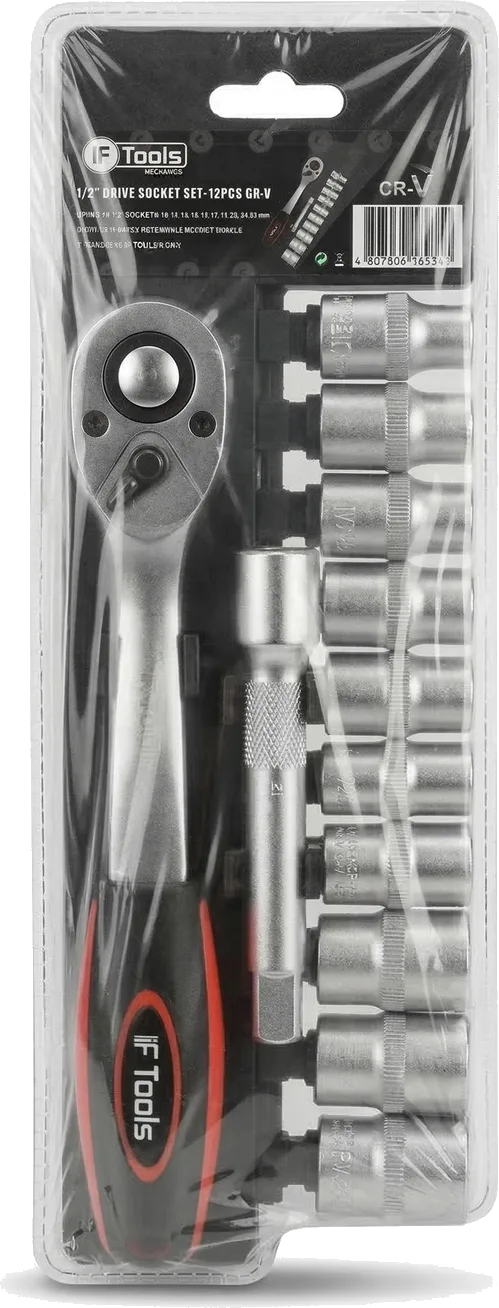
- 1/2 inch: wheel bolts, suspension, subframes and anything torqued above 100 Nm. Essential for car and van work, and the drive most torque wrenches use.
- 3/4 inch and up: trucks, trailers, agricultural machinery and heavy plant, where fasteners run past 400 Nm.
Most workshops end up with 1/2 inch plus one smaller drive. Adaptors let you cross between them, but a 1/2 inch socket on a 1/4 inch ratchet still cannot take 1/2 inch torque, so treat adaptors as a convenience and never as a substitute.
Chrome vanadium or impact sockets?
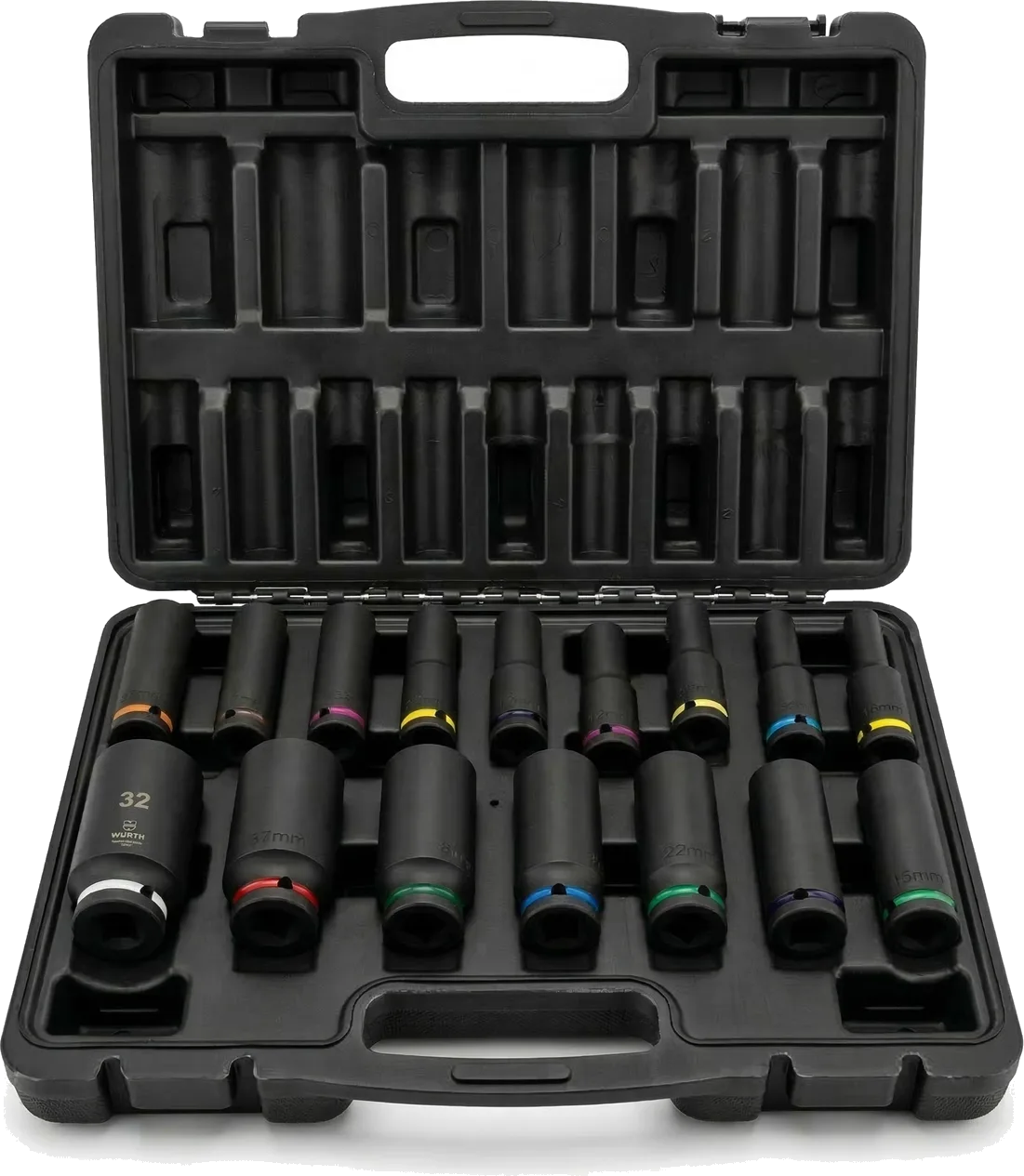
This is the safety point people tend to learn the hard way. The bright, polished sockets in a normal hand set are chrome vanadium: hardened for a thin wall and a precise fit, but relatively brittle. The matte black ones are chrome molybdenum, deliberately made softer and thicker so they absorb hammer blows and deform instead of shattering.
- Chrome vanadium (bright chrome): hand ratchets, torque wrenches and breaker bars. Slim walls reach recessed fasteners that an impact socket will not fit around.
- Chrome molybdenum (matte black impact): air and cordless impact wrenches, impact drivers and air ratchets. Thicker walls, and they should always be paired with impact-rated extensions and adaptors.
Never fit a chrome socket to an impact wrench. The hammering load can crack it, and a chrome socket fails by breaking apart rather than bending. If you own an impact wrench, buy a dedicated impact socket set alongside your hand set rather than trying to make one set do both jobs.
6-point or 12-point?
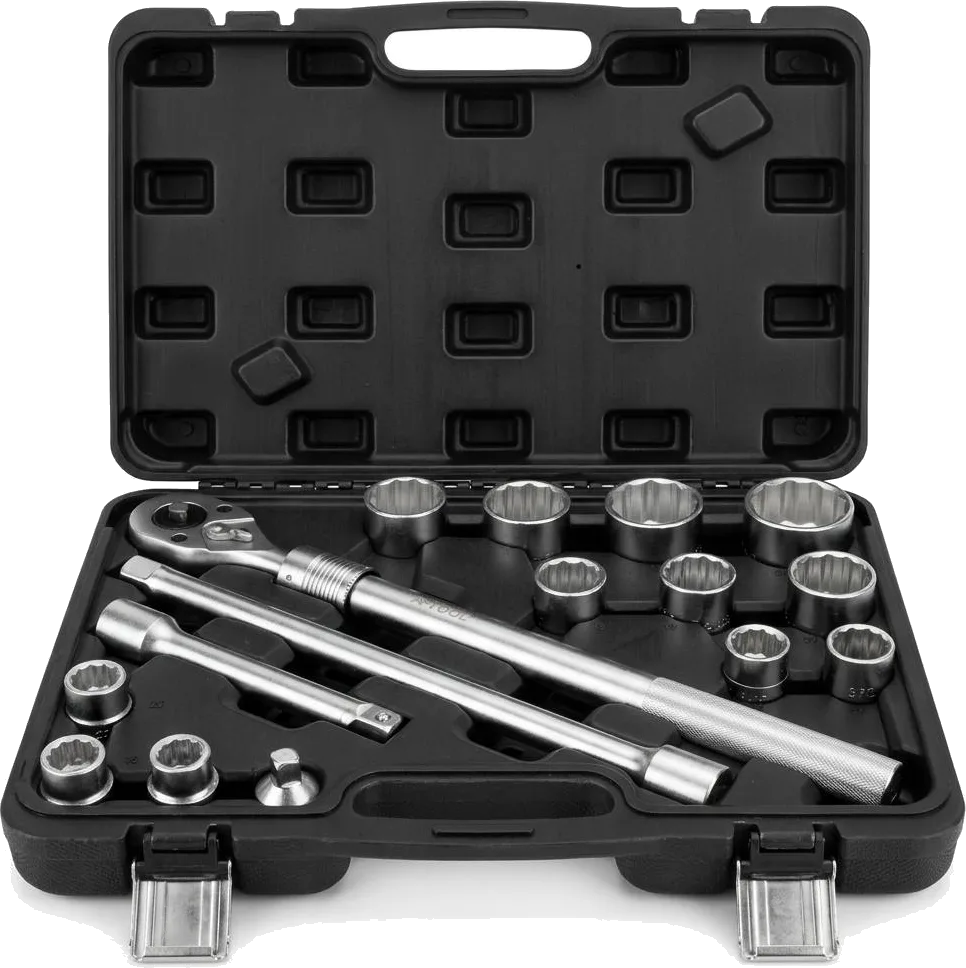
A 6-point socket contacts the six flats of the fastener. A 12-point engages every 30 degrees instead of every 60, so it finds purchase faster in a cramped space and also fits square and bi-hex heads.
- 6-point: far more contact area on the flats, so it is much harder to round off a tight, rusted or already damaged nut. The right default for automotive and impact work.
- 12-point: easier engagement where the swing arc is limited, and required for the bi-hex bolts used on some engine and driveshaft fittings.
If you buy one set, buy 6-point. Add 12-point later for the specific jobs that demand it.
Metric, imperial, or both
Vehicles and machinery sold in Europe are metric almost without exception. An 8 to 19 mm range covers the large majority of car work, and 6 to 32 mm covers nearly everything else you will meet in a general workshop. Imperial sizes, marked AF or SAE, are only worth buying if you regularly work on American vehicles, older British machinery or imported agricultural equipment. Mixed metric and imperial sets sound generous but usually mean fewer metric sizes for the same money, so read the size list rather than the total count.
Deep sockets, extensions and the ratchet itself
Shallow sockets are the default. Deep sockets exist for fasteners sitting on long studs, and they are what you need for wheel nuts on studs, exhaust fixings and spark plugs. A dedicated spark plug socket adds a rubber insert or a magnet so the plug lifts out with the socket instead of dropping back into the head. Beyond the sockets themselves, the accessories decide how usable a set is day to day:
- Extension bars in two or three lengths, so you can reach past a manifold without leaning the socket over on the fastener.
- A universal joint for bolts you cannot approach straight on.
- A sliding T-bar for starting stiff fasteners without loading the ratchet mechanism.
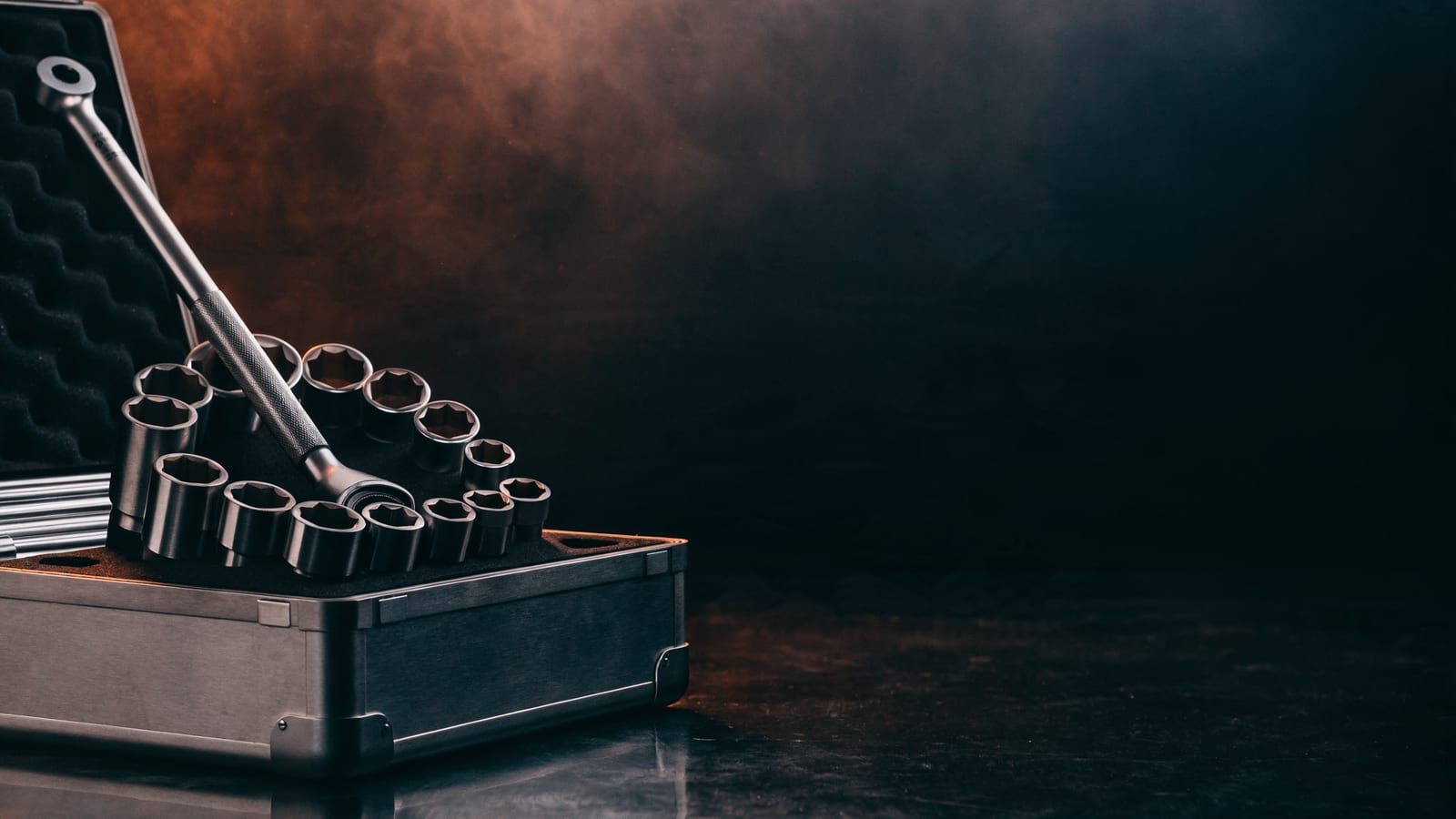
- A case with a marked recess per socket, so a missing size is obvious at a glance instead of discovered halfway through a job.
The ratchet is the part that fails first, and tooth count is the spec to read. A 24-tooth ratchet needs roughly 15 degrees of swing before it catches the next tooth, a 72-tooth needs about 5 degrees, and a 90-tooth around 4. In an engine bay where you can barely move the handle, that difference decides whether a job is possible at all. Seventy-two teeth is the practical sweet spot: fine enough for tight spaces, with pawl teeth still substantial enough to carry real load. Look for a reversing lever you can flick with the same hand that holds the ratchet, and a knurled or non-slip handle that still works with oily gloves.
One rule applies regardless of quality: a ratchet is for running fasteners in and out, not for cracking them loose. Use a breaker bar to break the initial torque and a torque wrench for final tightening, and a good ratchet will last years instead of months.
Buying once instead of twice
A sensible first purchase for a home or professional workshop is a 1/2 inch 6-point metric set with a 72-tooth ratchet, a range of extensions and a deep socket range, backed up by a smaller 1/4 or 3/8 inch set for lighter work. Add impact sockets when you buy an impact wrench, not before. Sets built into a fitted case or a drawer module are worth the small premium, because sockets that live in a marked recess get put back, while loose sockets in a bag migrate to the bottom of the toolbox and quietly disappear. You can compare complete assortments and individual drives across our workshop equipment range below.