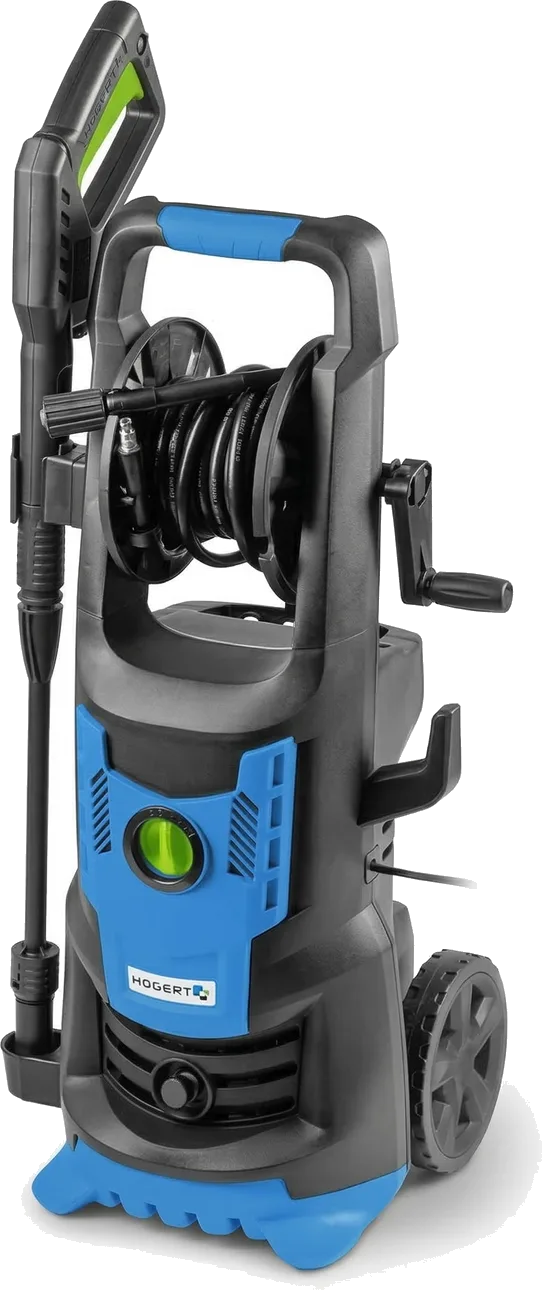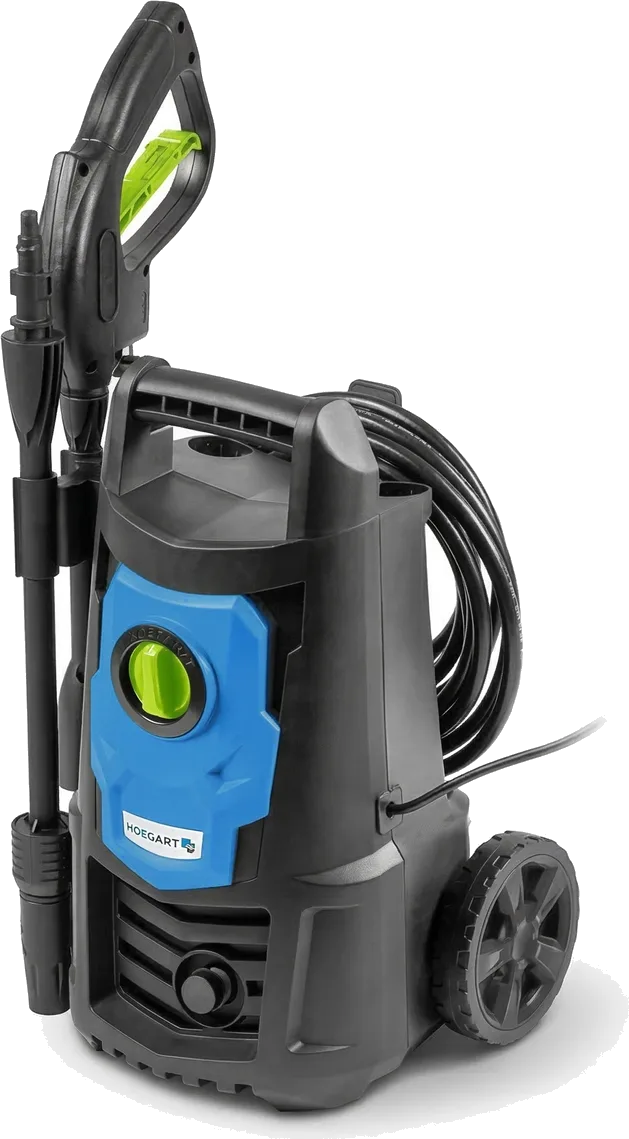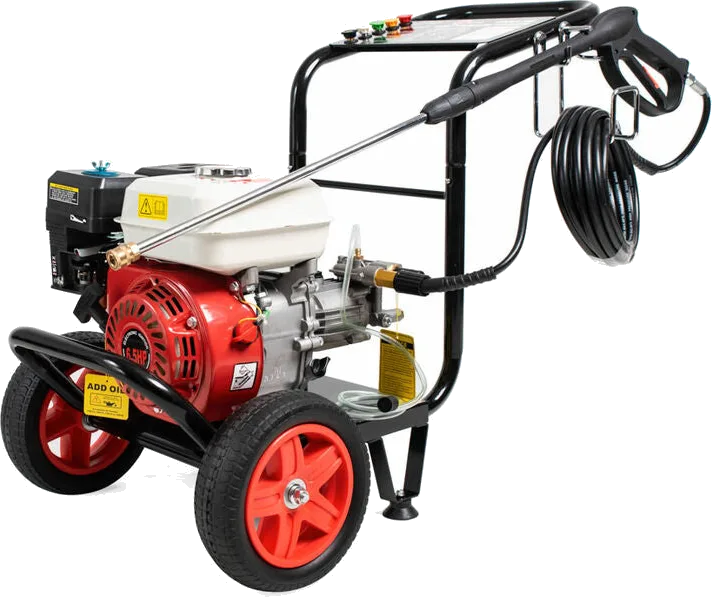
Pressure in bar is only half the story. Learn how flow rate, motor type and nozzles decide whether a pressure washer actually cleans, and which model fits your jobs.
Bar is only half the story
Almost every pressure washer is sold on one number: the pressure, measured in bar or PSI. It matters, but on its own it tells you little. A machine that hits 180 bar with a trickle of water will clean more slowly than one at 150 bar moving twice the volume. The two figures work together, and understanding both is the difference between a smart purchase and a disappointing one.
Pressure (bar or PSI) is the force that lifts dirt off a surface. Flow rate (litres per hour) is how much water carries that dirt away. High pressure loosens, high flow rinses. You want a sensible balance of the two, not the biggest bar figure on the shelf.
How much pressure do you actually need?
More bar is not always better. Too much pressure on a soft surface strips paint, splinters wood and forces water behind render. Match the machine to the dirtiest job you do regularly, not to a number.
- Up to 120 bar: cars, motorbikes, garden furniture, bikes and window frames. Gentle enough for paintwork, quick enough for weekly cleaning.
- 120 to 150 bar: patios, decking, fences, walls and light machinery. The all-round range for a house with outdoor space.
- 150 to 200 bar: driveways, block paving, agricultural gear, ingrained algae and oil stains. This is where a machine earns its keep on tough, regular jobs.
- Over 200 bar: professional and continuous-duty work, construction and heavy plant. Usually petrol driven.
Flow rate: the spec buyers forget
Flow rate, quoted in litres per hour, decides how fast you finish. A domestic unit typically moves 350 to 500 l/h; a semi-professional machine 500 to 700 l/h. On a large driveway that gap can halve your working time, because every pass rinses a wider, cleaner strip. When two machines quote similar bar, the one with the higher flow rate is usually the better cleaner. Always read both numbers together before you compare prices.
Electric or petrol?
The power source shapes where and how long you can work.
- Electric: lighter, quieter, no fumes and near-zero maintenance. Ideal for domestic and indoor-adjacent use where a socket is within reach. A 1500 to 2400 W motor covers most home and light-trade tasks. The limit is the cable and the mains supply.
- Petrol: full independence from power sources, far higher sustained pressure and flow, and the stamina for all-day cleaning. The trade-offs are weight, noise, exhaust and routine engine servicing. Choose petrol for fields, building sites and remote yards where no socket exists.
For most buyers a quality electric unit is the right answer. Reach for a petrol pressure washer only when you genuinely work away from mains power or need continuous professional output.
Nozzles, hoses and the details that matter
The right accessories change a machine from adequate to excellent.
- Nozzles: a 0-degree pencil jet for stubborn spots, a 15 to 25-degree fan for general cleaning, and a low-pressure soap nozzle for detergent. An adjustable or dial-select lance gives you all three in one.
- Rotary (turbo) nozzle: spins a pencil jet in a cone, combining bite and coverage. The single most useful upgrade for driveways and paving.
- Hose length: 5 metres is minimum, 8 to 10 metres saves constant repositioning of the machine.
- Metal pump head: brass or aluminium pumps outlast the all-plastic heads on the cheapest units, especially with hard water.
- Total stop system: shuts the motor off when you release the trigger, saving power and pump wear.
Look after it and it lasts
A pressure washer fails early from neglect, rarely from use. Never run the pump dry, and always let the water flow before you pull the trigger. Use the inlet filter to keep grit out of the pump, and in cold regions drain the machine or add antifreeze so residual water cannot freeze and crack the head. Coil the hose without kinks and store the unit indoors. Treated this way, a mid-range washer serves for many seasons.
Matching the machine to the job
Decide on the toughest surface you clean often, then pick the lowest pressure that handles it comfortably and the highest flow rate your budget allows. A homeowner with a car and a patio is well served by a 120 to 150 bar electric unit; a smallholding or a busy trade needs 180 bar or a petrol machine. Below you find the models our customers rely on, from a compact 120 bar electric washer to a high-output petrol unit, all shipped fast within the EU with a quality guarantee.