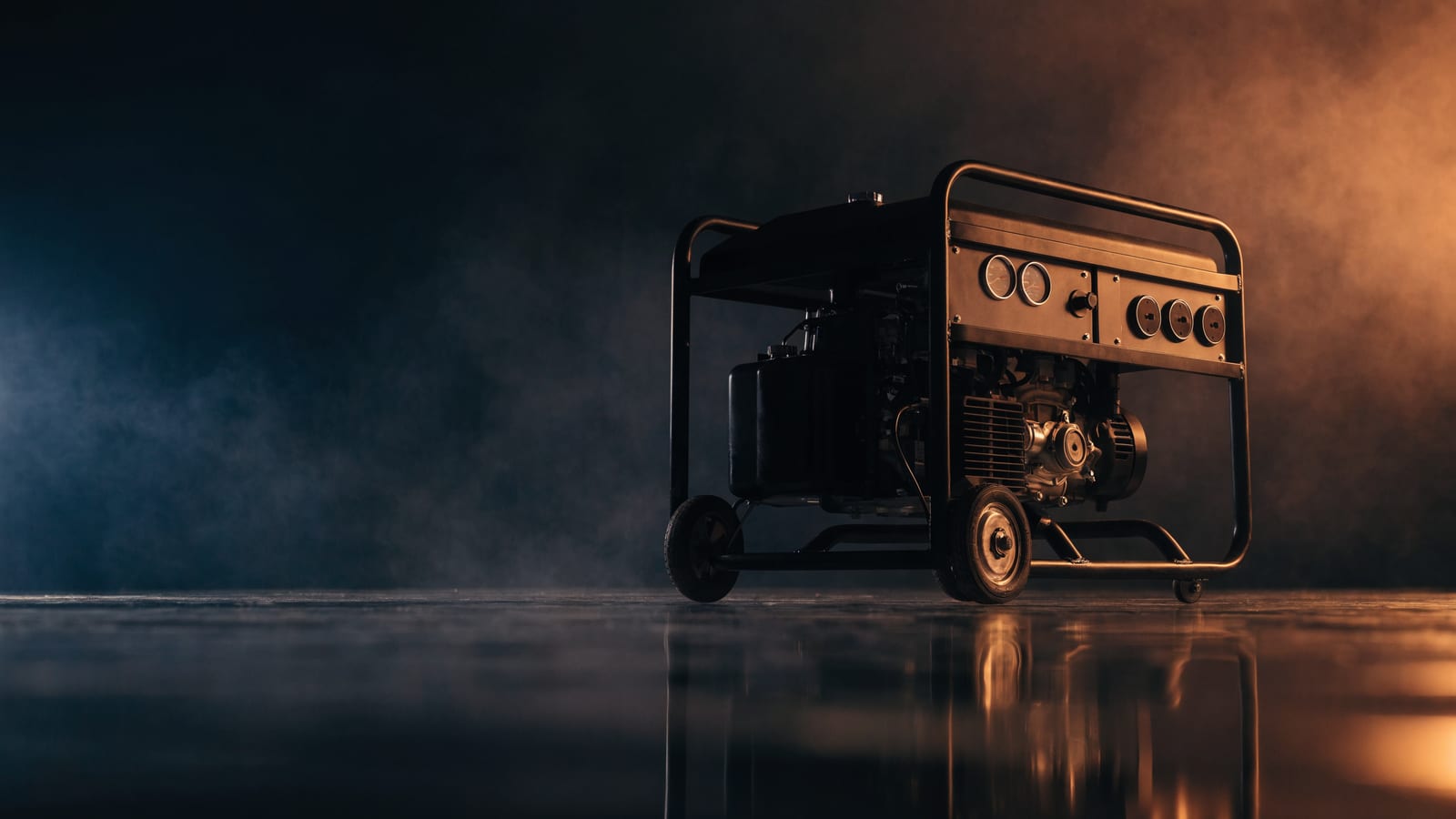
3.5 kW, 8.5 kW or 10 kW? How to size a petrol or diesel generator for your home, workshop or building site, and why AVR and ATS matter.
Start from the loads, not the price tag
Add up the wattage of everything that must run at the same time, then add 25 to 30 percent headroom. Motors are the trap: a circular saw rated 2,000 W can draw two to three times that for a second at startup, and a compressor even more. Sizing to the label without startup surge is the most common mistake.
Quick sizing reference
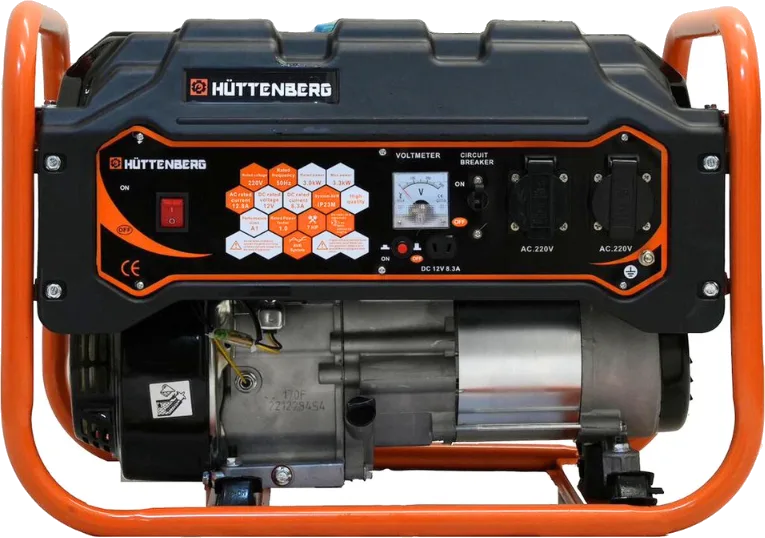
- 3 to 4 kW: home emergency basics (fridge, lights, boiler electronics, router) or a couple of power tools on a small site.
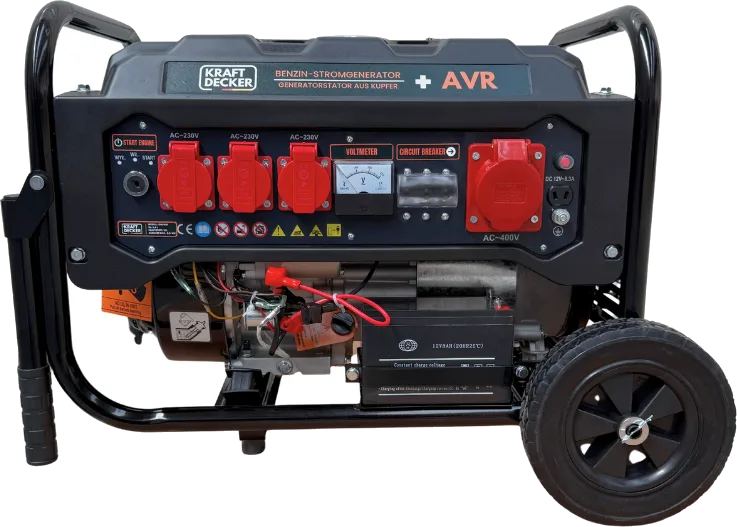
- 8 to 9 kW: a whole small house during an outage, or a site running a saw, a mixer and lighting together.
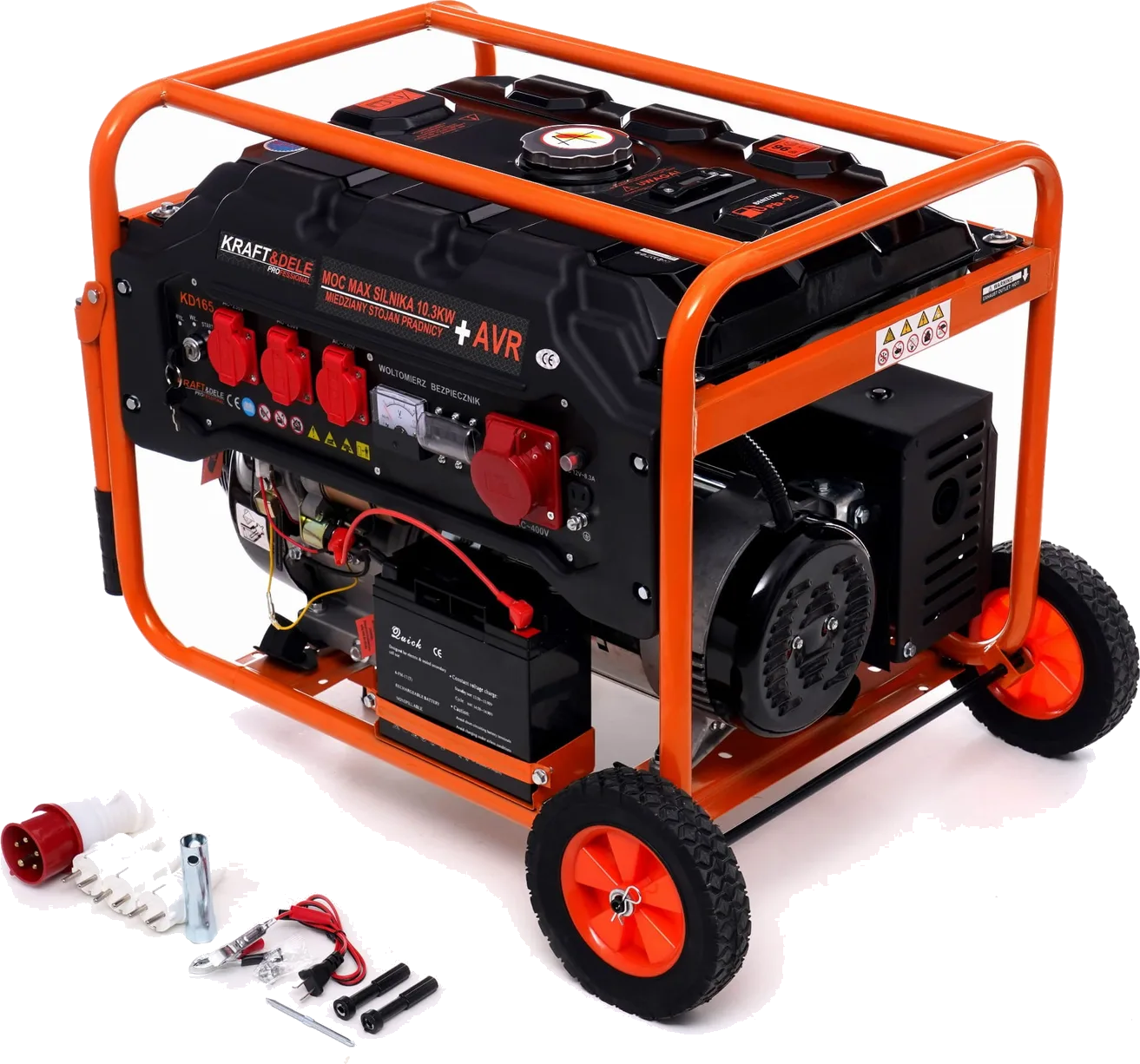
- 10 kW and up: workshops, farms, events and any setup with heavy motors or three-phase equipment.
Why AVR matters
AVR (Automatic Voltage Regulation) keeps output voltage stable as loads switch on and off. Without it, voltage spikes can damage electronics like boiler control boards, laptops and battery chargers. All the soundproofed generators in our range include AVR as standard.
ATS: power that comes back by itself
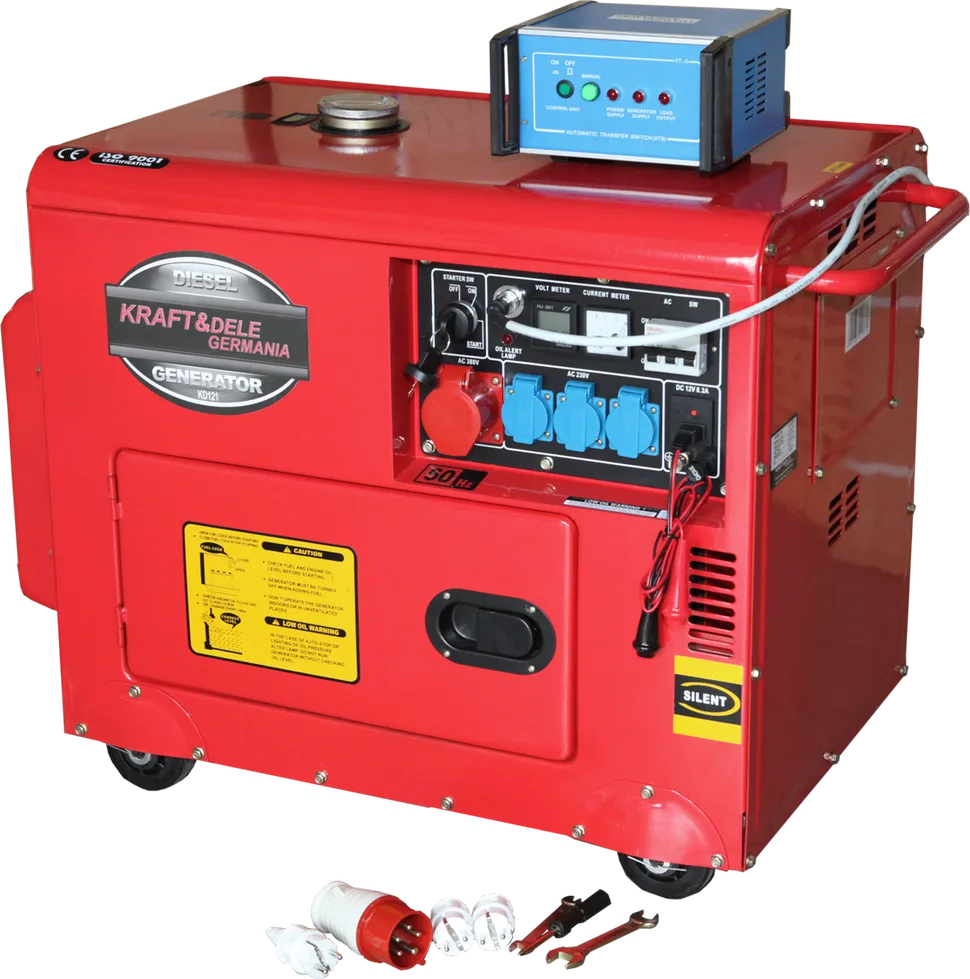
An ATS (Automatic Transfer Switch) generator set starts itself when mains power fails and switches your circuits over automatically. For fridges and freezers, heating in winter, stables or server cabinets, an ATS diesel set means an outage at 3 a.m. is a non-event.
Petrol or diesel?
Petrol units cost less and start easily in the cold: right for occasional and emergency use. Diesel wins on fuel cost and engine life under continuous load: right for daily site work and long autonomy. Soundproofed enclosures are worth it in both cases if the generator runs anywhere near people.